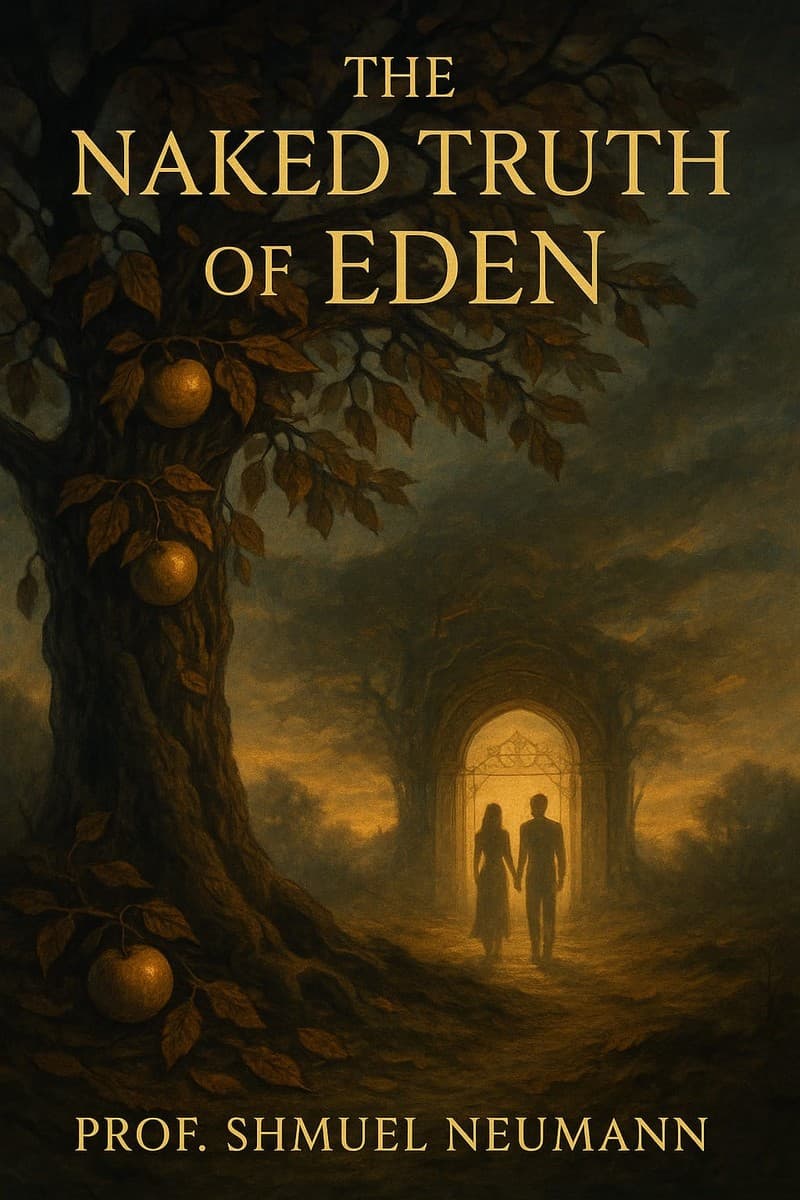
The Naked Truth of Eden
ביקורות
“A fearless exploration of shame, intimacy, and the human condition—from Gan Eden to today. Not for the faint-hearted. But for the heartbroken.”
סרטון הסבר
פודקאסט שמע
על הספר
From fig leaves to redemption. A fearless exploration of shame, intimacy, and the human condition—from Gan Eden to today. Not for the faint-hearted. But for the heartbroken.
Before there was pain, there was light. The Naked Truth of Eden opens with a return to the beginning—before the bite, before the blame. In the Garden, Adam and Chava stood without shame, clothed not in garments but in divine radiance. Their oneness with each other and with God was seamless, uninterrupted. But with the first sin came the first tear in the soul’s fabric—a sudden awareness, a turning inward, a scrambling for fig leaves. This isn’t just allegory; it’s the birth of shame. Drawing from the Zohar, the Ramban, and the Maharal, the opening chapters present shame not as a flaw but as a sacred signal—our spiritual immune system alerting us to moral rupture and urging us to return.
From there, the book travels forward in time, tracing how Jewish thinkers have grappled with shame across the centuries. From the Tosafists’ halachic rigor to the philosophical musings of Maimonides and the mystical frameworks of the Ari and Baal Shem Tov, shame emerges as both a blade and a bridge. Rebbe Nachman, with his piercing psychological insight, reframes shame as the abyss into which a person must descend in order to find redemption. These chapters are not merely academic; they read like a map for the soul wandering in the dark.
Yet theory is not enough. Neumann grounds his exploration in real life—how shame shows up in marriage, in parenting, in the boardroom, and at the bimah. He does not flinch from the harshness of halbanat panim—public humiliation—which the Talmud equates with bloodshed. And yet, even in this terrain, he finds healing. The Ben Ish Chai’s daring compassion for women who have been violated, his refusal to let shame dictate their future, is spotlighted as a model of Torah’s redemptive power. Shame, in these pages, becomes not a psychological label, but a deeply relational force—one that can rupture or restore depending on how it is held.
As the journey deepens, the fourth section becomes a guidebook for healing. Teshuvah is no longer a ritual; it is an alchemy that transmutes shame into holiness. Torah study, prayer, and connection to a supportive community are offered not as platitudes, but as living tools—divine instruments that reframe shame as sacred sensitivity rather than soul decay. Here, shame is not erased. It is transformed—rewoven into dignity, into a garment that no longer conceals but reveals the soul’s worth.
The final chapters look toward redemption. Drawing on prophetic promises and Kabbalistic insight, Neumann envisions a messianic future where shame is no longer a weapon but a doorway. “My people shall never again be put to shame,” the prophet Joel declares—and in that vision lies hope not just for individuals, but for a world made whole. The book closes with a powerful thesis: that healing shame is not only a personal journey, but part of the cosmic mission of tikkun olam—repairing what was broken in Eden.
The Naked Truth of Eden offers a sweeping theological, psychological, and mystical exploration of shame through the lens of Jewish wisdom. Prof. Shmuel Neumann traces the origins of shame to the Edenic narrative, showing how Adam and Eve’s shift from divine alignment to self-consciousness marked the birth of shame as a spiritual dislocation.
This book blends theology, halacha, Kabbalah, and pastoral care into a profound guide for anyone seeking to understand or heal shame. It is not merely descriptive—it is redemptive, showing that shame, when approached through Torah, can be a bridge to the restoration of dignity and joy.
This is not self-help. This is soul restoration. And it begins with the courage to look directly at shame—and not flinch.