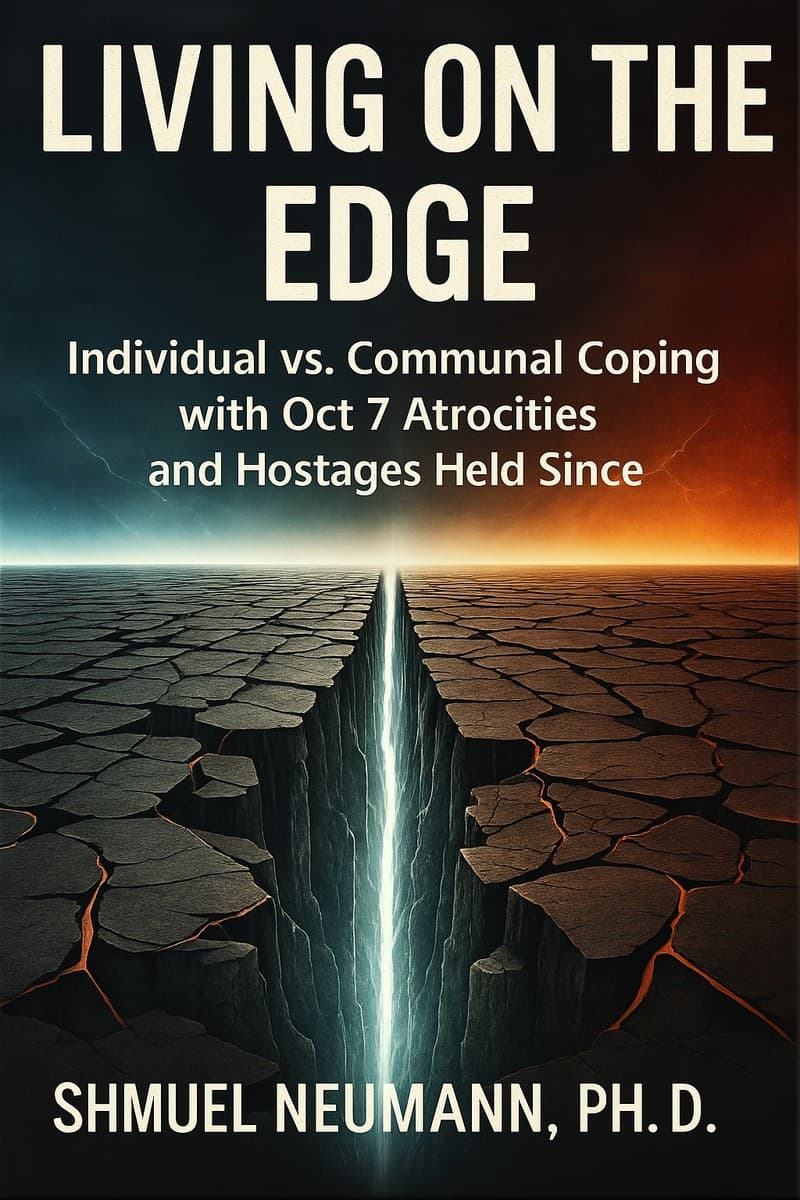
Living on the Edge
ביקורות
“Adrenaline is addictive. So is chaos. This book explores why calm feels threatening to trauma survivors—and how many unknowingly recreate crisis just to feel alive. A brutally honest take on addiction, drama cycles, and emotional instability.”
סרטון הסבר
פודקאסט שמע
על הספר
You weren’t chasing thrills. You were running from stillness. Adrenaline is addictive. So is chaos. This book explores why calm feels threatening to trauma survivors—and how many unknowingly recreate crisis just to feel alive. A brutally honest take on addiction, drama cycles, and emotional instability.
How Israel Can Heal from Communal Trauma?
Trauma is not an abstract concept. It is lived, breathed, and deeply embedded in the collective consciousness of those who endure conflict, violence, and existential threats. For many, survival means pushing forward, suppressing emotions, and instinctively reacting in ways that feel protective. But what if these natural responses don’t help? What if they actually make things worse?
In the aftermath of crisis, people do what feels right—they isolate, numb themselves, seek distractions, or become hyper-alert to future dangers. These are human survival instincts, but they often fail to provide healing. Instead, they deepen wounds, reinforce cycles of trauma, and prevent the very resilience needed to rebuild.
This book does not simply explore trauma as an academic or psychological phenomenon. It is a strategic guide to breaking the trauma cycle at both the individual and national level. The reality is that many of today’s coping mechanisms—both personal and societal—do not foster resilience. In fact, many instinctual responses actively hinder recovery, prolong suffering, and weaken national stability.
But trauma does not have to define us. It can be addressed, managed, and even transformed into a foundation for resilience, strength, and unbreakable national fortitude. This book offers a roadmap to that transformation—from understanding the reality of trauma, to recognizing where our instincts fail us, to implementing research-backed solutions that actually work.
For those who only feel safe when something’s about to blow up.
Trauma isn’t just personal. It’s national.
Living on the Edge is a landmark work on the psychology of collective trauma in Israel. In this gripping and timely book, Prof. Shmuel Neumann presents a roadmap for how a country under siege—from October 7th to daily existential threats—can move from survival mode to national resilience.
Drawing from cutting-edge trauma research, Torah principles, and social policy frameworks, Neumann explains how individual and communal trauma interact—and how instinctive coping mechanisms often backfire. He warns that suppression, denial, and performative activism may feel natural but can actually entrench long-term psychological harm.
This book is not about therapy. It is about survival. It is about redesigning systems, narratives, and cultural responses to ensure that trauma does not become Israel’s identity. Written for policymakers, mental health professionals, educators, and citizens alike, Living on the Edge is a wake-up call—and a guidebook for healing a nation.
This book does not simply explore trauma as an academic or psychological phenomenon. It is a strategic guide to breaking the trauma cycle at both the individual and national level. The reality is that many of today’s coping mechanisms—both personal and societal—do not foster resilience. In fact, many instinctual responses actively hinder recovery, prolong suffering, and weaken national stability.
But trauma does not have to define us. It can be addressed, managed, and even transformed into a foundation for resilience, strength, and unbreakable national fortitude. This book offers a roadmap to that transformation—from understanding the reality of trauma, to recognizing where our instincts fail us, to implementing research-backed solutions that actually work.