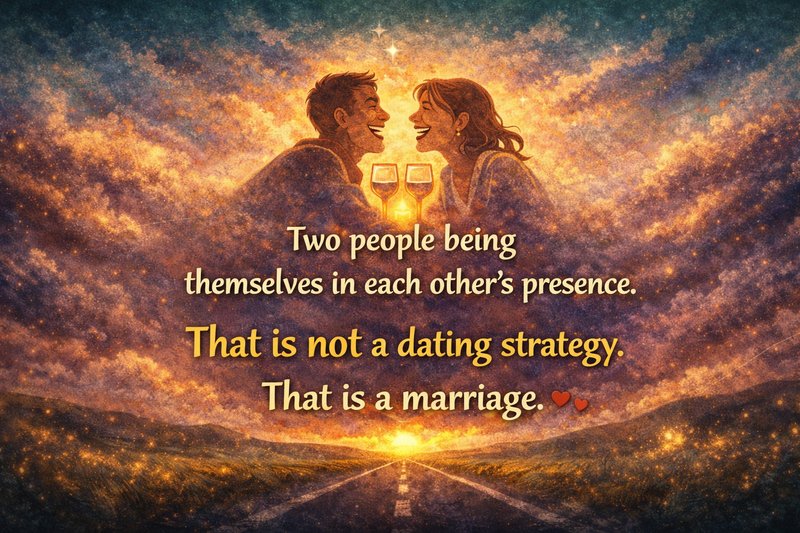
On imperfection, habituation, and what a marriage is actually for
Someone sat across from a shadchan recently and explained, for the third time, why the last suggestion hadn’t worked out. He was good. Really good. Smart, kind, the right background. Something was missing. The shadchan asked what. She couldn’t say. Just something. A spark.
Nobody tells her that the spark she’s waiting for has an expiration date.
The electricity at the beginning of a new relationship — the sleeplessness, the certainty that this particular person is singular and irreplaceable — is a neurological condition, and a temporary one. Human beings adapt to positive experiences the same way they adapt to any repeated stimulus. The feeling fades.[1] Two years in, the emotional baselines of partnered and unpartnered people converge. The honeymoon ends not because something has gone wrong. That is what honeymoons do. If you start a marriage at the peak of that feeling, there is only one direction to travel.
The Torah knew this before neuroscience arrived. Hashem looked at Adam and said lo tov heyot ha-adam levado. Not: give him someone who excites him. Give him an ezer kenegdo. A helper suited to him. Someone whose presence completes what was incomplete. The vision from Bereishis was never the honeymoon. It was the home.
The Gemara in Yevamos is categorical. A man without a wife lives without joy, without blessing, without good, without Torah, without fortification, without peace.[2] Six dimensions of human existence that marriage alone unlocks. Not a perfect marriage. Not a marriage that began with electricity. A marriage. The institution assumes two imperfect people. That is not a bug in the design. That is the design.
At the completion of creation, Hashem declared it tov me’od — very good. Bereishis Rabbah asks what makes it very good rather than simply good.[3] The answer: tov me’od refers to the yetzer hara. Without it, a man would not build a house, would not marry, would not beget children. The longing that drives a person toward marriage is not a corruption of human nature. It is woven into creation. Declared very good. Adam was not incomplete because of some correctable deficiency. Wholeness required another. Two people whose particular gaps accommodate each other, not canceling each other out but fitting.
The Baal Shem Tov said it plainly: your fellow is your mirror. The blemish you see in another is the imperfection you have not yet addressed in yourself.[4] The person who cannot find anyone good enough has not yet asked what good enough looks like for someone like her.
The shidduch world runs almost entirely on the wrong question. Does he excite me. Does he impress me. Does he make me feel good about myself. Those feelings are real. They are also not the measure of anything. The question that matters is simpler and harder: can we build something together. Not whether he is everything she imagined, but whether there is enough here — enough middos, enough commitment, enough shared direction — to begin.
Holding a spouse to standards no human being can meet — what the research calls other-oriented perfectionism — reliably predicts lower marital satisfaction, more conflict, and an inability to repair after fights.[5] Underneath those standards is usually fear. The fear that if this person is not perfect, something terrible will be revealed about her for having chosen him. That fear has ended more shidduchim than any dealbreaker on any list.
The most clarifying data comes from couples whose marriages began with almost no romantic feeling at all. In studies across twelve countries, self-reported love at the start of arranged marriages averaged 3.9 on a 10-point scale.[6] By the end of the study period, it had reached 8.5. Not because the spark eventually arrived. Because the couples built something. Commitment and sacrifice drove the growth. Not chemistry. The love was not discovered. It was constructed.
Marriages that begin cold heat up over time.[7] They do not start at the peak. They start somewhere workable and climb. The feeling of electricity at the beginning of a shidduch is real. It is also the least predictive data point available. What predicts a marriage that lasts is not the height of the initial feeling but what two people construct together after that feeling settles.
What gets constructed is not comfort. It is character. Two people living together, raising children together, keeping a home together — that is the crucible in which a person becomes who he needs to become. Marriage does not find you at your best. It makes you better. The Gemara in Yevamos states it without qualification: a man without a wife is not a man.[8] Not incomplete. Not diminished. Not a man. That is not a social observation. It is a metaphysical one. Together they reach what neither could reach alone. That is the purpose.
Marriage is not a product. It is a project — the longest and most demanding project of a human life. Two imperfect people, with gaps that fit each other, constructing something neither could have built alone. The byproduct, not incidentally, is children. And the building of a home. And the carrying of generations.
A man without a wife lives without joy, without blessing, without good, without Torah, without fortification, and without peace.
Good enough? From there, nothing gets better. Yet, it does.
Unless you ruin it.
[1]Diener, E. et al. (2006), cited in Bao, K.J. & Lyubomirsky, S. (2013), “Making it last: Combating hedonic adaptation in romantic relationships,” Journal of Positive Psychology, 8(3), 196–206. Happiness levels return to baseline approximately two years after a positive life change, irrespective of relationship status.
[2]Yevamos 62b.
[3]Bereishis Rabbah 9:7.
[4]Baal Shem Tov, “Thirty-Six Aphorisms,” cited at Chabad.org.
[5]Haring, M., Hewitt, P.L. & Flett, G.L. (2003), “Perfectionism, coping, and quality of intimate relationships,” Journal of Marriage and Family, 65, 143–158. See also the comprehensive review in Current Approaches in Psychiatry (2025): “The Pursuit of Perfection in Relationships: A Review of Perfectionism and Romantic Relationships,” finding other-oriented and socially prescribed perfectionism consistently associated with interpersonal conflict, lower marital satisfaction, and social disconnection.
[6]Epstein, R. (2010), “How Love Emerges in Arranged Marriages: Two Cross-Cultural Studies,” N=52, participants from 12 countries and 6 religions. Self-reported love grew from a mean of 3.9 to 8.5 on a 10-point scale; commitment and sacrifice emerged as the strongest growth factors.
[7]Willoughby, B.J. (Brigham Young University, School of Family Life), cited in multiple secondary analyses of arranged versus autonomous marriages. The pattern of lower initial expectations yielding higher long-term satisfaction is also documented in Kazemi-Mohammadi dissertation, Texas Woman’s University (2019).
[8]Yevamos 63a.